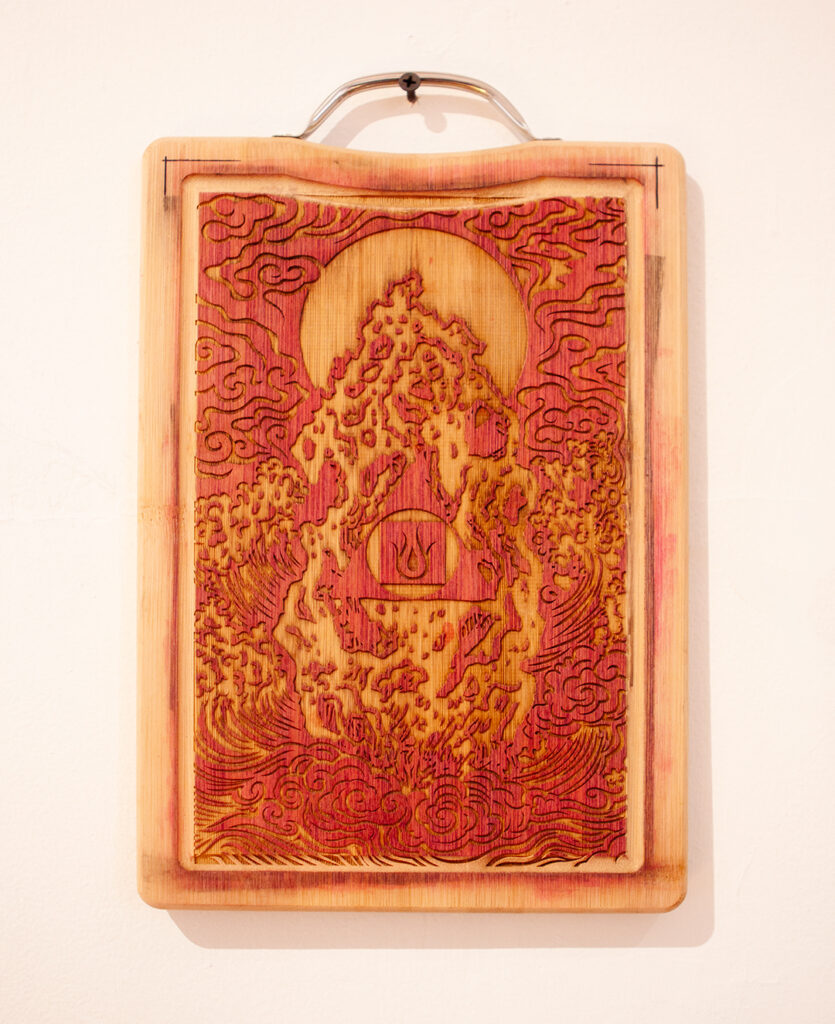
名稱: 石頭媽
時間: 2026 年 10 月 17 日下午 2:00 至 3:00
地點: 紐約市總督島
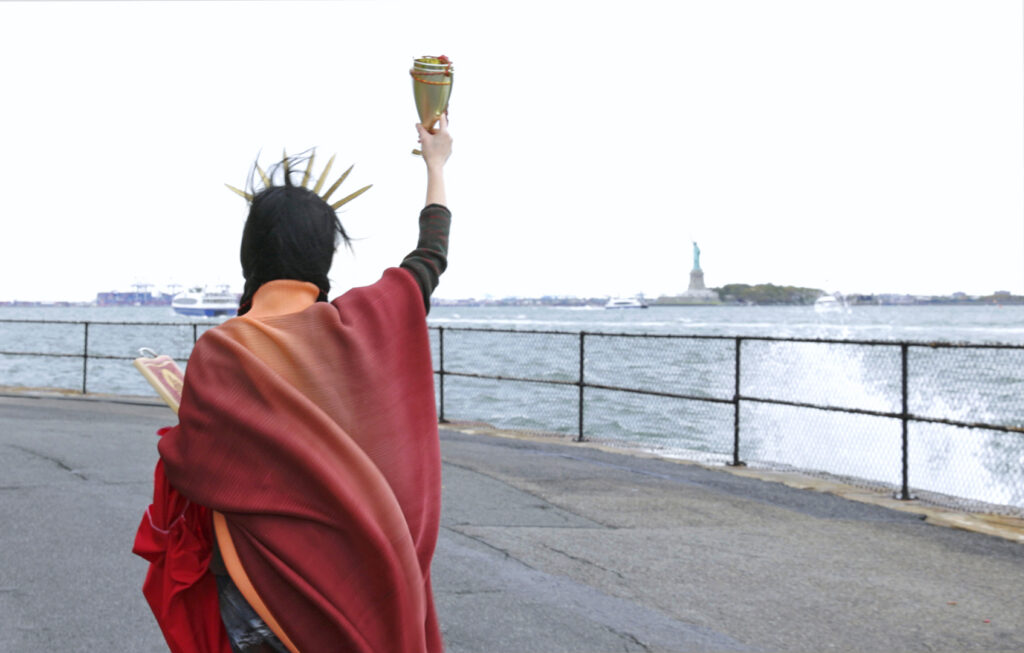
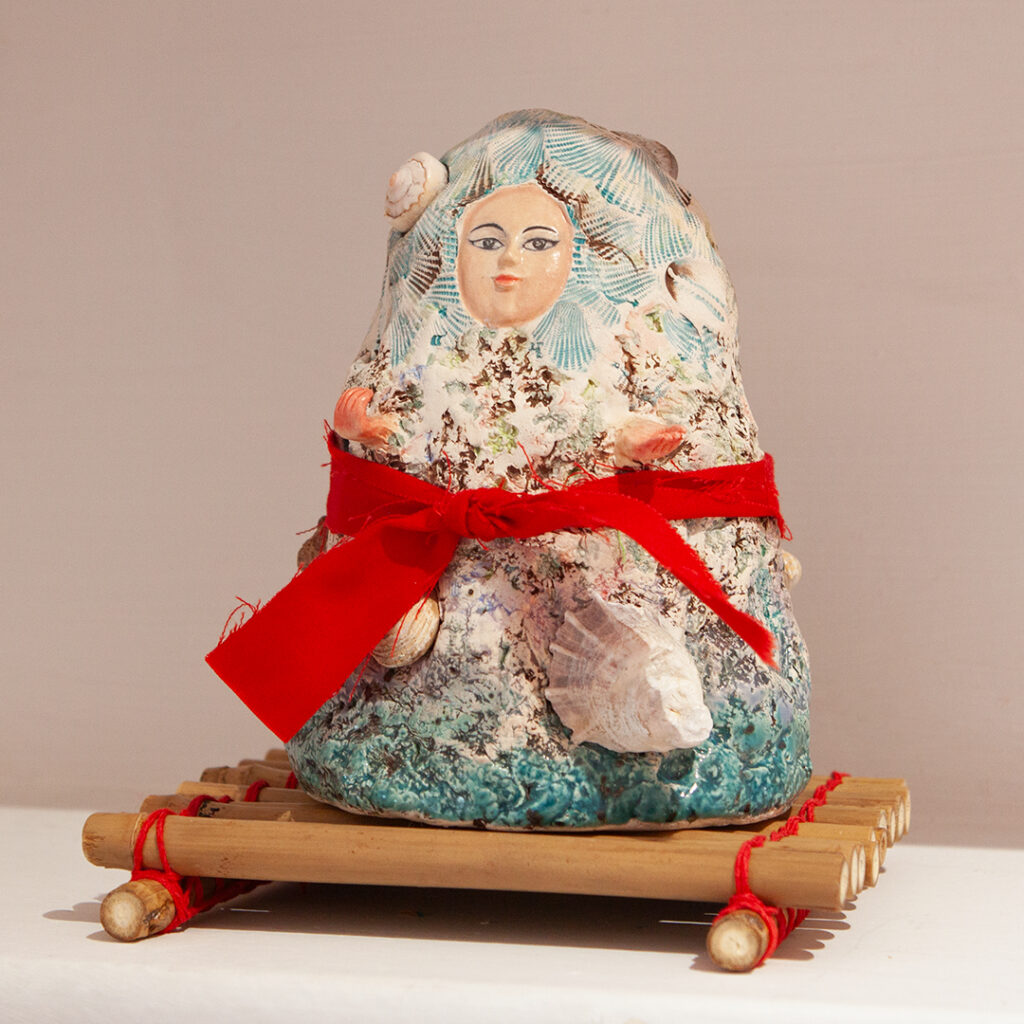
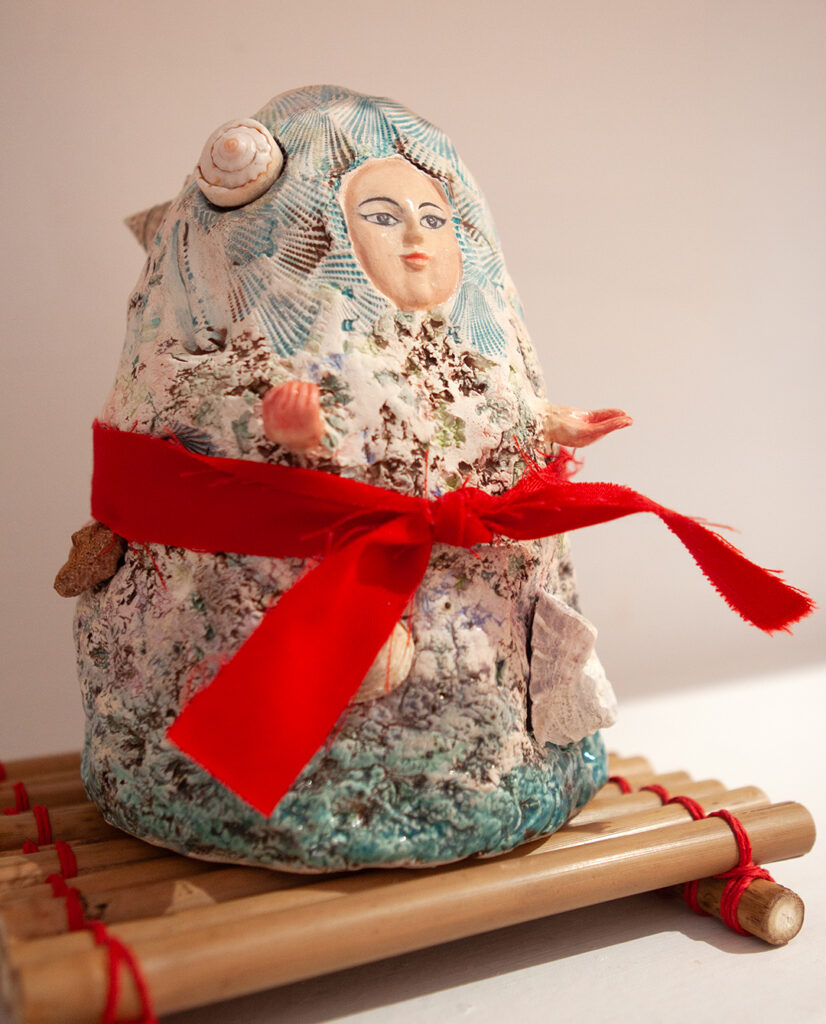
《石頭媽》(Stone Matsu)結合台灣民間海洋信仰的守護神「媽祖」與「石頭公」的泛靈信仰,並將她與迎接移民的自由女神像(Statue of Liberty)並置對照。
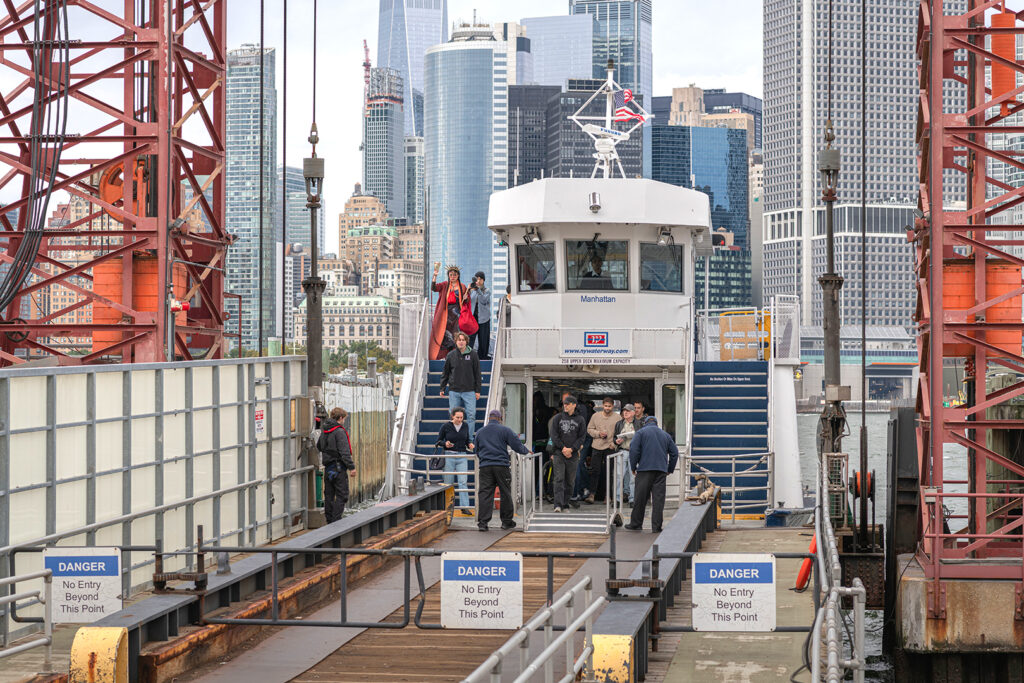
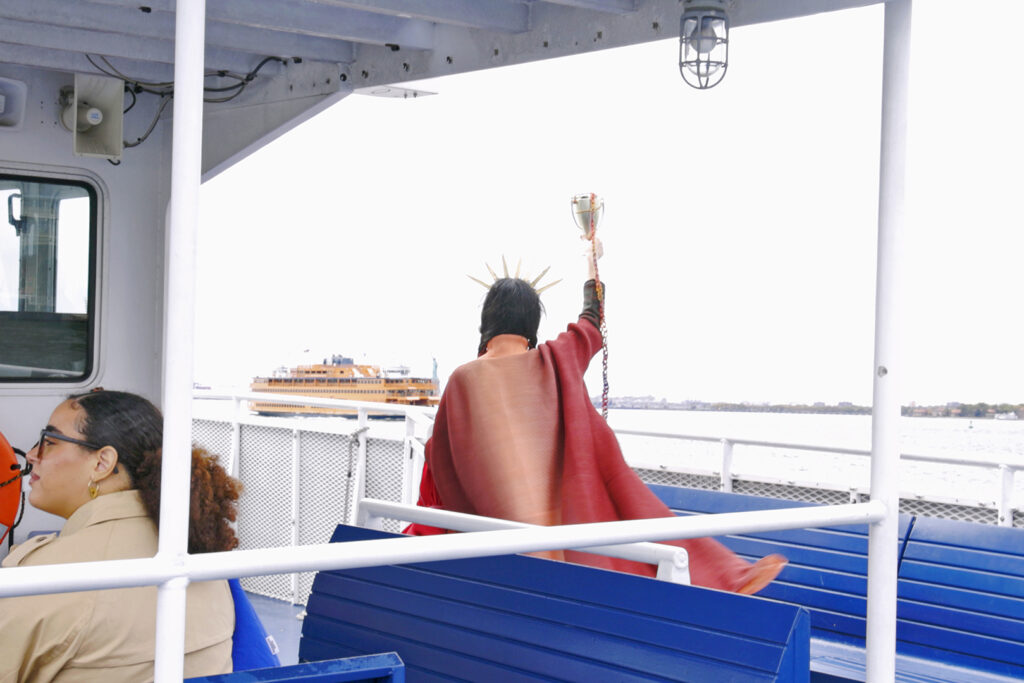
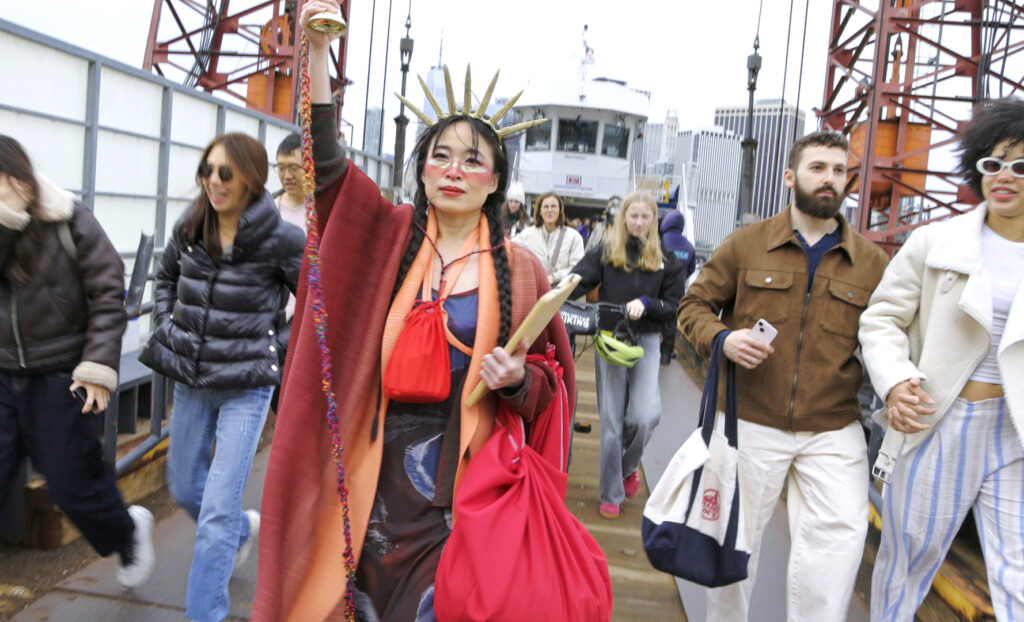
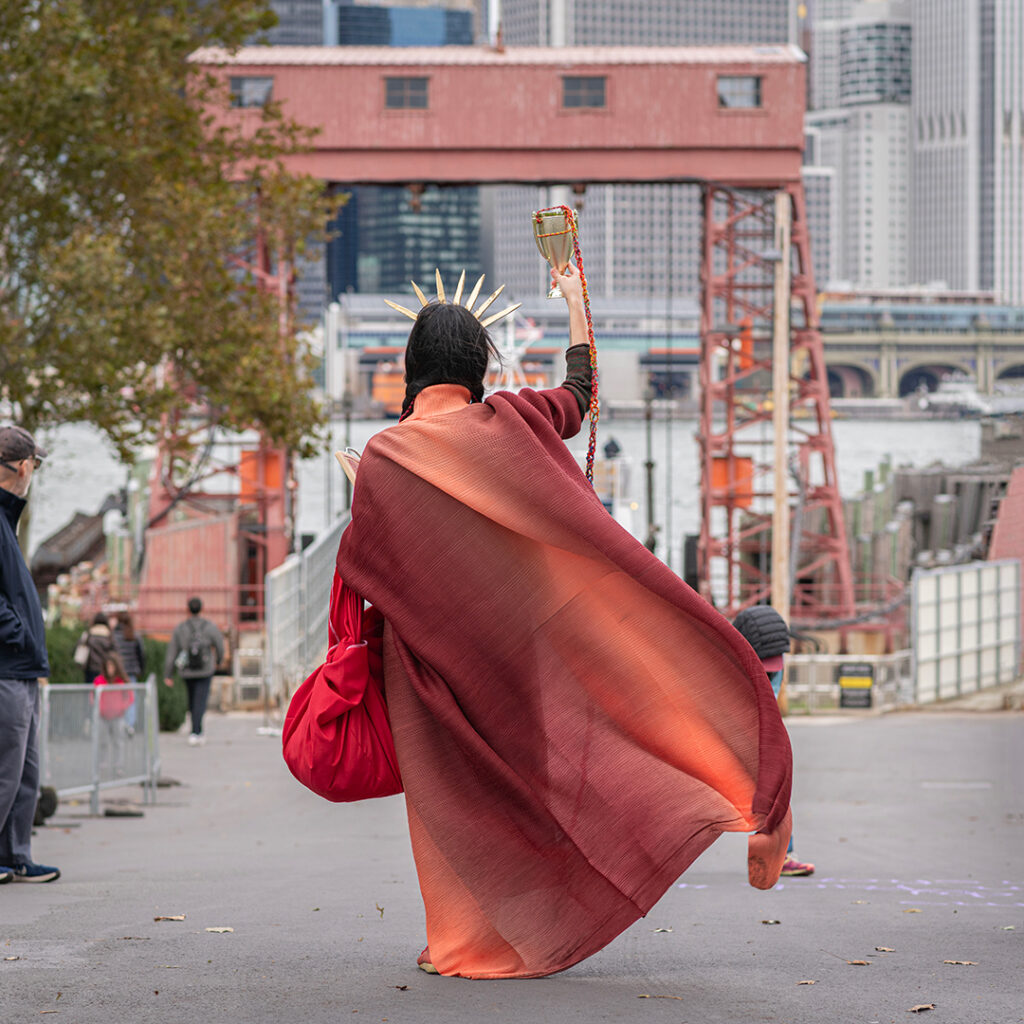
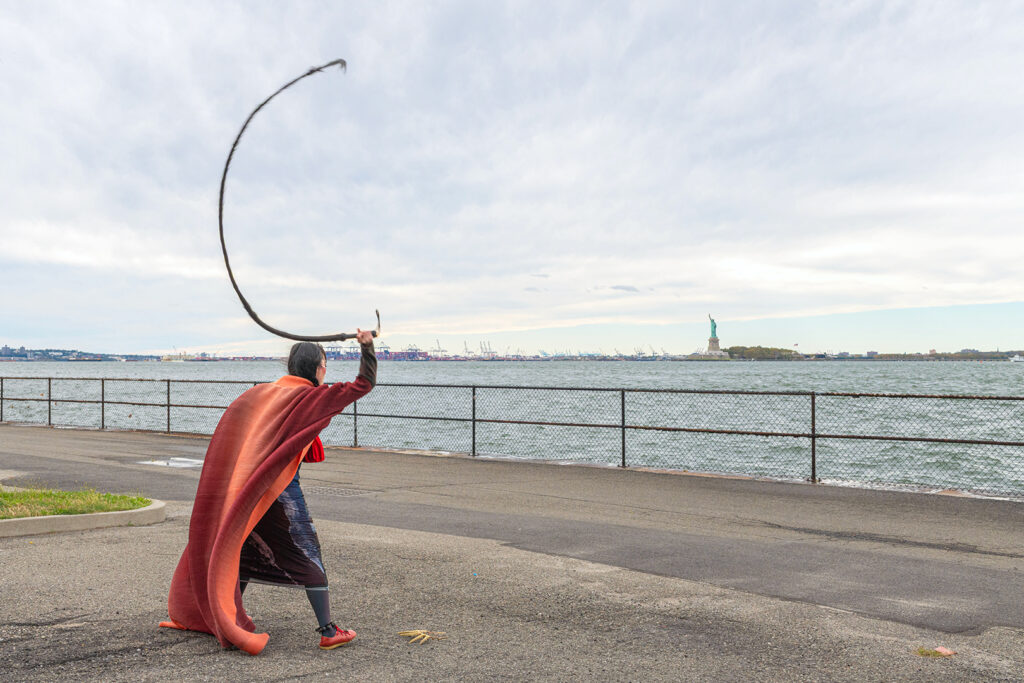
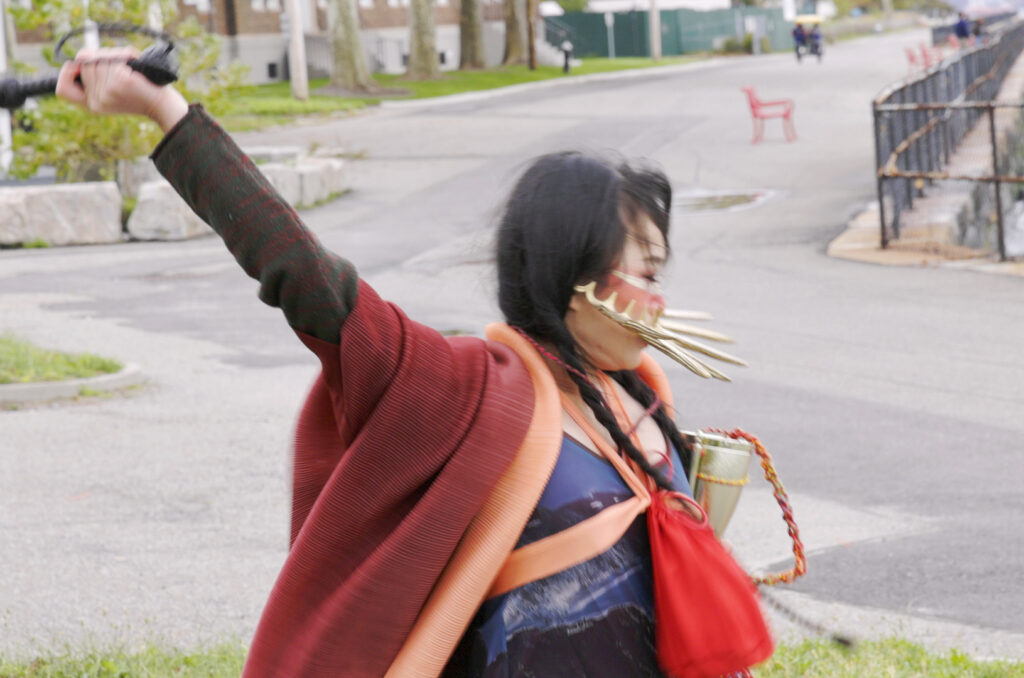
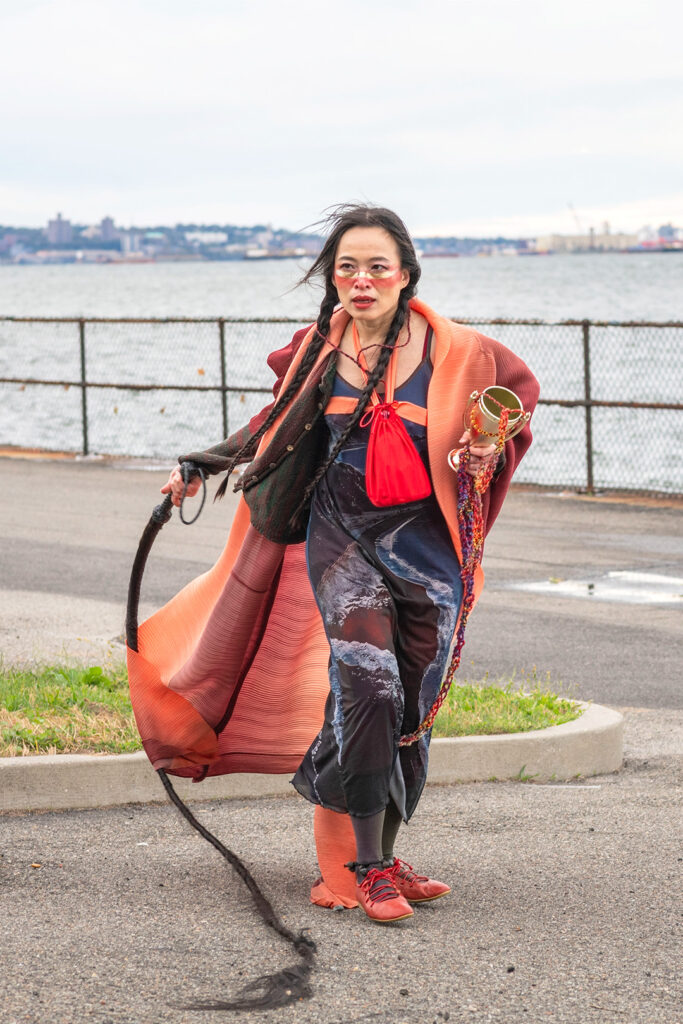
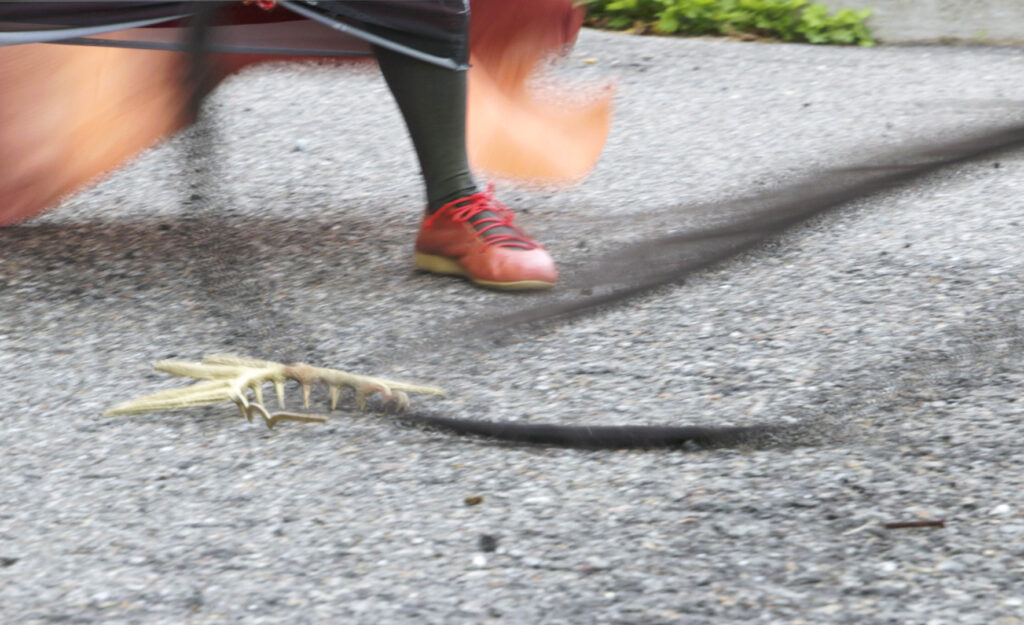
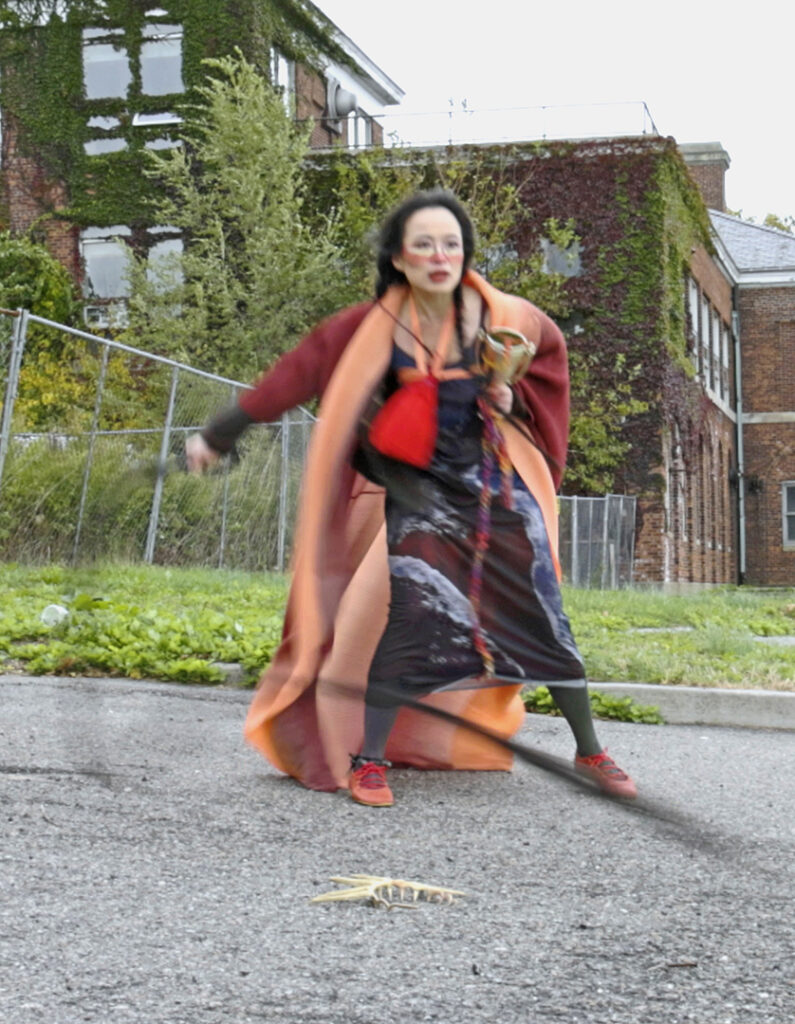
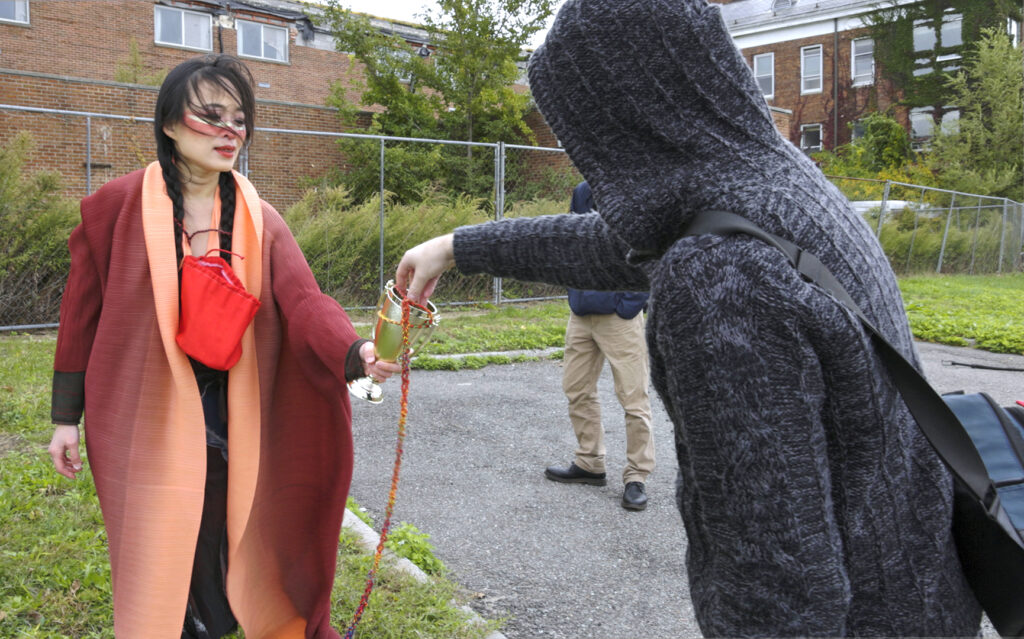
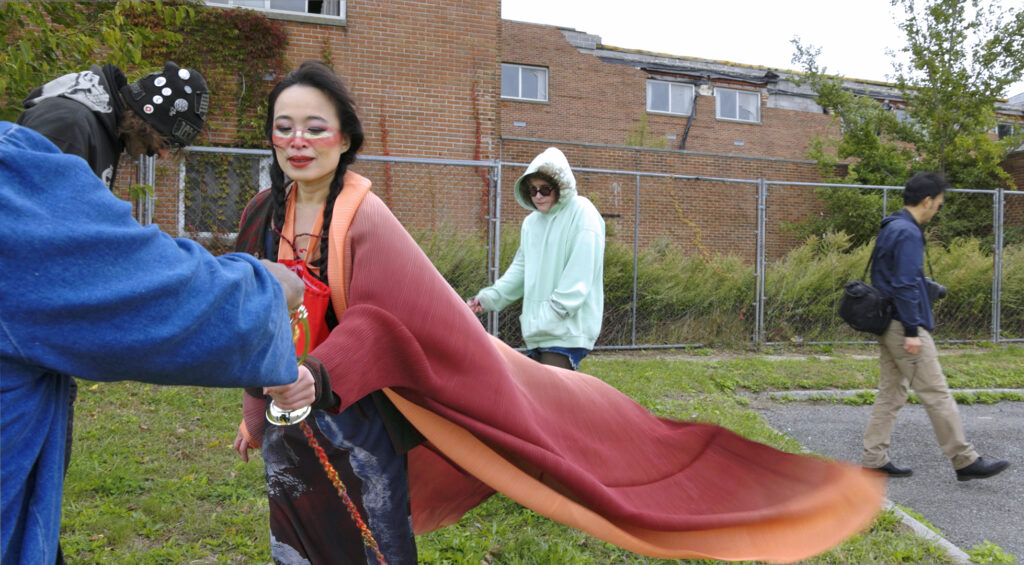
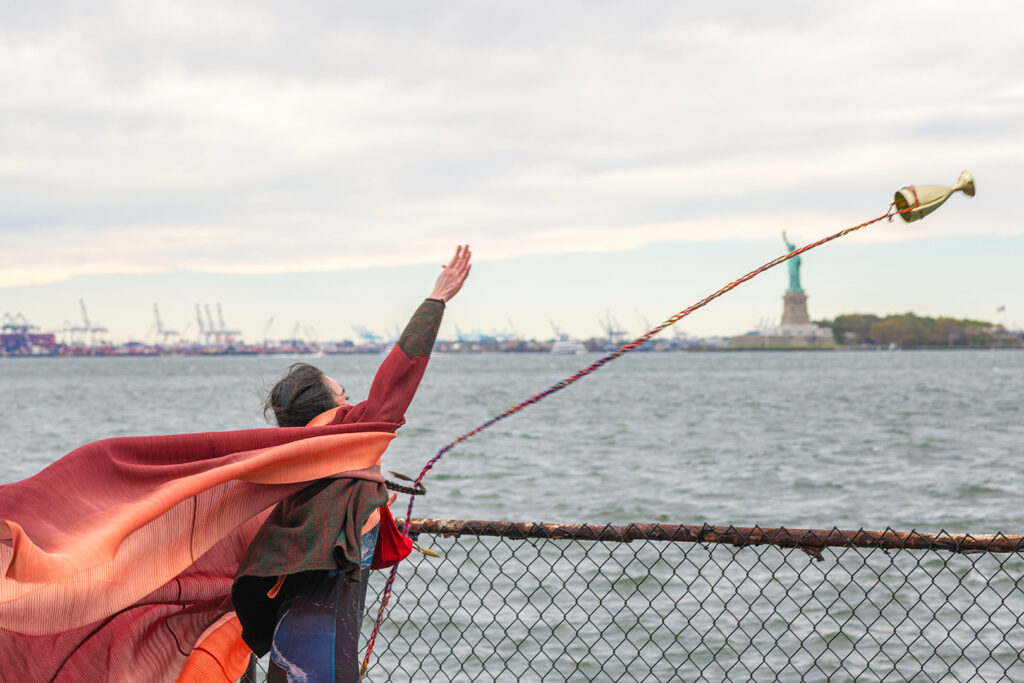
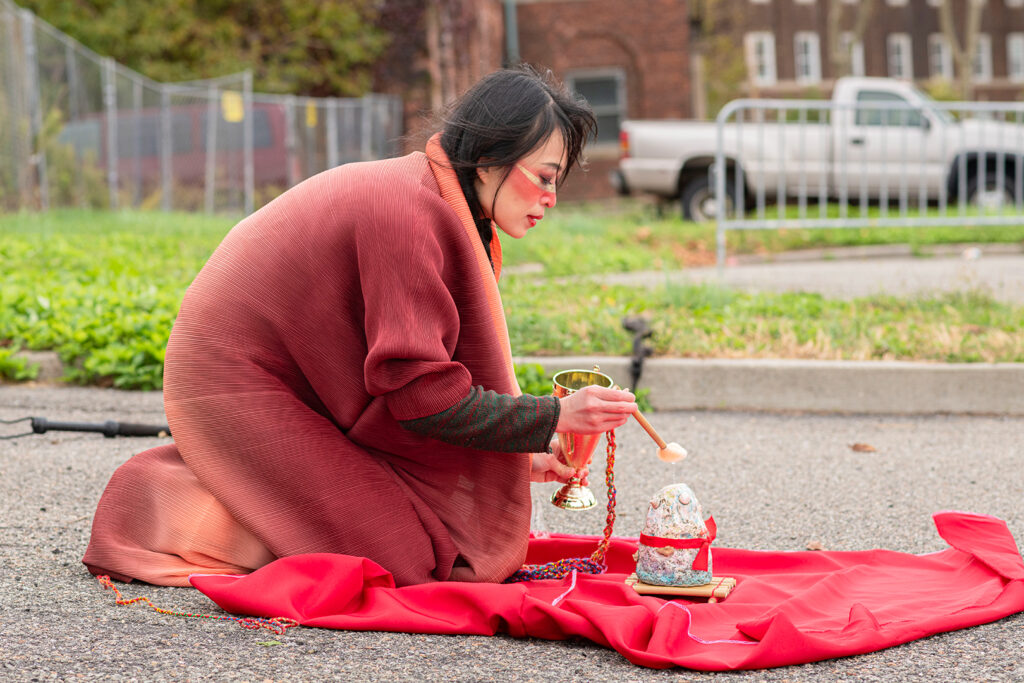
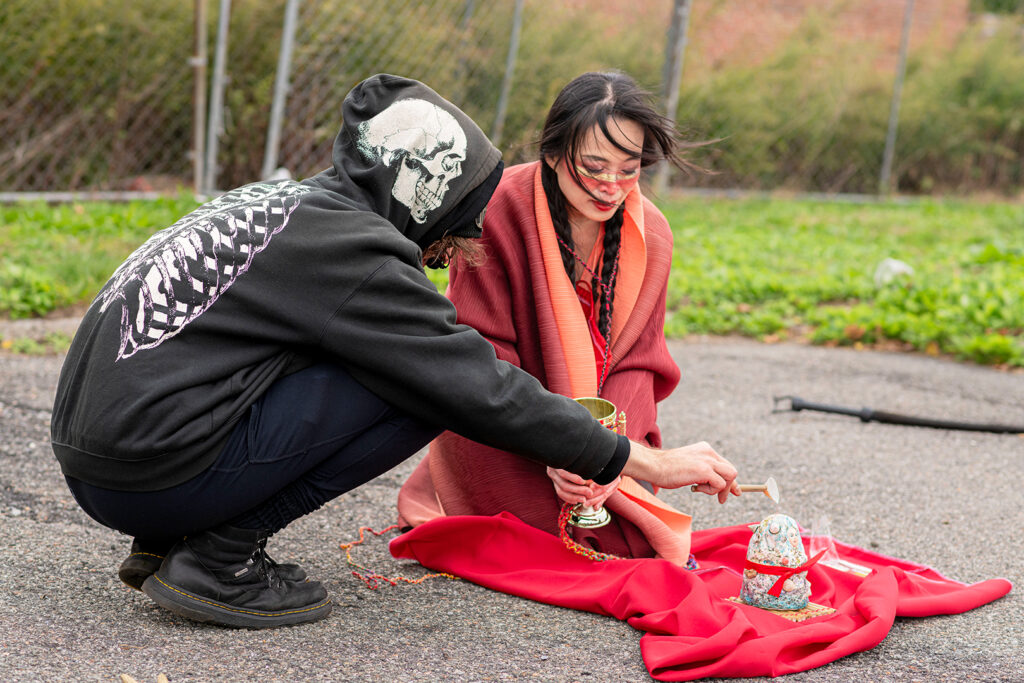
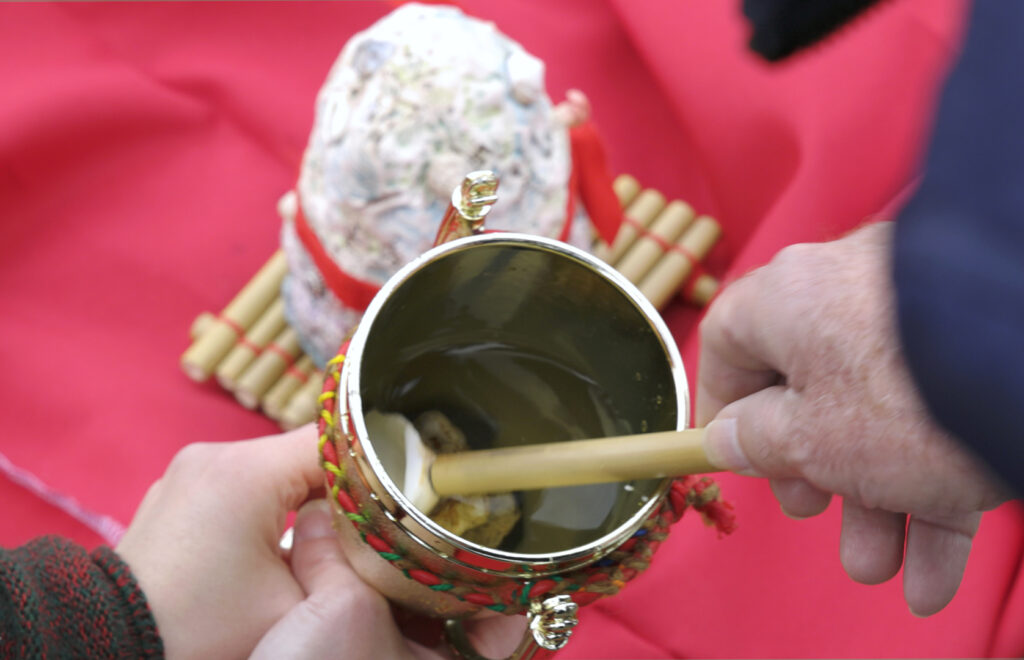
藝術家面向自由女神,胸前背著《石頭媽》從曼哈頓的砲台海事大廈(Battery Maritime Building)出發,渡海抵達總督島西北方渡輪碼頭前往威廉斯堡(Castle Williams)與自由女神對望處,以髮鞭拍擊地面,象徵性地驅逐法西斯主義、種族主義、性別主義。隨著動作愈發激烈,她頭上的冠冕掉落於地;她隨即揮鞭擊打冠冕所代表的階級制度。接著,她向民眾收集石塊放入手舉的金色獎盃中將之拋入港口,拉動繫於獎盃上、宛如臍帶般從她裙底雙腿間延伸而出的繩索將獎盃收回,並將汲取的海水緩緩灑在媽祖神像上。
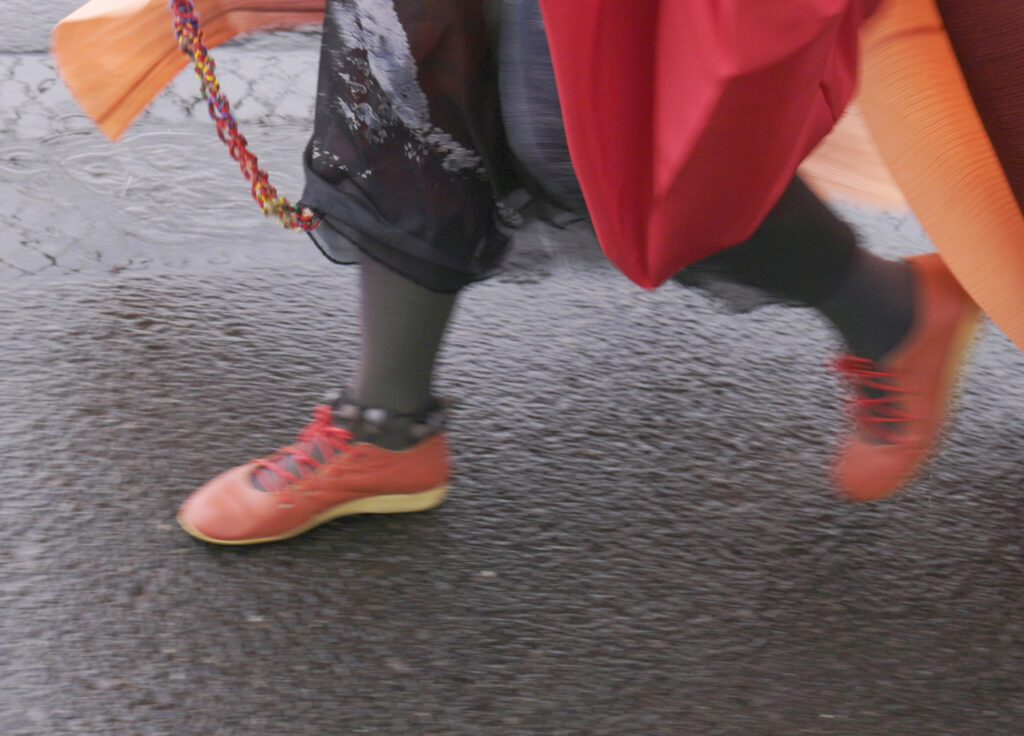
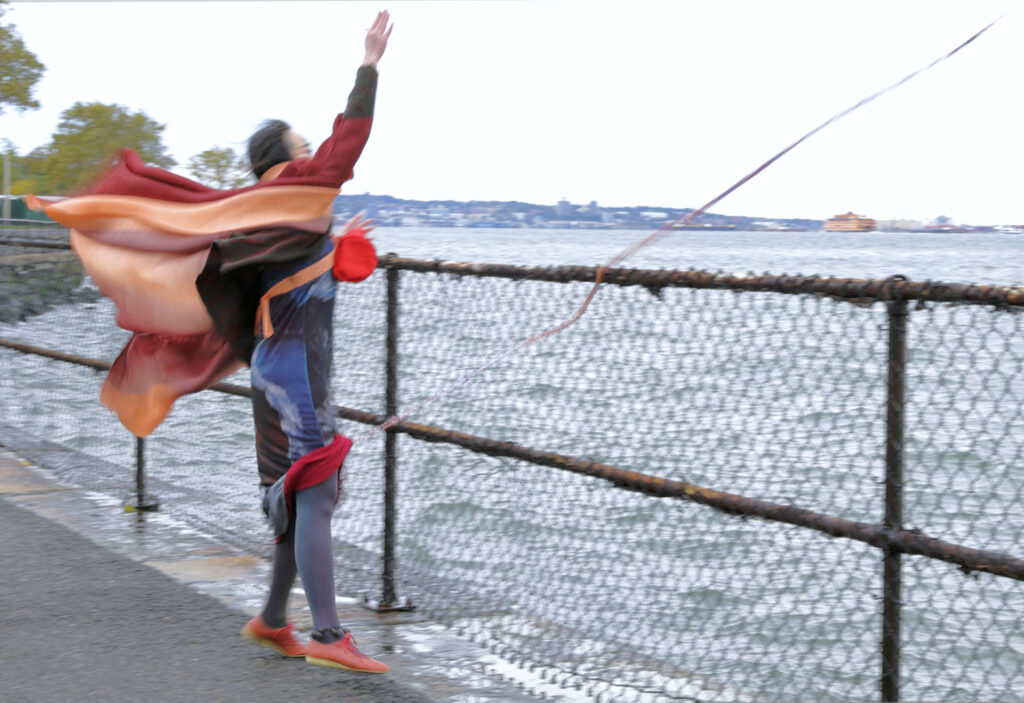
這條纏繞在藝術家裙底的長鏈,藉拋出的重力瞬間解開成一條能跨越圍籬的長線,促成一場藝術家、媽祖、自由女神共飲解放的揭露儀式。自由女神像腳下斷裂的鎖鏈,象徵解放奴隸制度;而從我體內如臍帶或內臟般脫垂而出的長鏈,則指向將大自然與女性身體從人類的佔有、控制與剝削中解放出來。當汲水完成、長鏈瞬間解開的剎那,身體束縛的釋放以及人類中心主義的鬆動,將動能回歸到與土地、水域及其他生靈共生的關係。透過將繩索大力拋入大海的壯闊姿態,讓自由女神像最初建造時期被資助者所隱匿的鎖鏈意象重新開展於世人眼前。
金色冠冕用七根玉米筍的造型呼應自由女神頭上七芒冠代表的七個大陸、七個海洋。玉米是美國原產的穀物,傳到亞洲後地方化成亞洲料理常見的玉米筍食材,又透過移民傳回美國出現在亞洲餐廳的桌上介紹給其他的移民與原住民,是個能代表全球化、移民、與飲食文化的遷徙傳播的物種,與藝術家自己的移民生命歷程相應。
《石頭媽》匯聚了身體、自然、與共同的關懷與泛靈信仰,在島嶼地景與超越人類的自然智慧之中,重新詮釋靈性庇佑的傳統,並透過跨越國界、連結人、土地與記憶的旅程,邀請參與者共同省思全球化、環境正義與身體政治。
Title: Stone Matsu
Year: 2026
Medium: Mixed media, site-specific participatory performance
Dimensions: 1-hour performance
Stone Matsu merges Mazu, the guardian goddess of Taiwan's maritime folk religion, with the animist cosmology of Shitougong (Stone Deity), juxtaposing her against the Statue of Liberty, who welcomes immigrants.
Facing the Statue of Liberty with Stone Matsu strapped to her chest, the artist departed from Manhattan’s Battery Maritime Building, crossing the harbor to Governors Island’s northwest ferry dock and walking to Castle Williams to stand opposite Lady Liberty. There, she struck the ground with a hair whip to symbolically drive out fascism, racism, and sexism. As the movements intensified, the crown fell from her head; she whipped the fallen crown to strike down the systems of dominance it represents. She then gathered stones from the public into a raised golden trophy and cast it into the harbor. Pulling on a rope attached to the trophy, extending like an umbilical cord from beneath her skirt between her legs, she hauled it back and slowly poured the collected seawater over the Mazu figure.
Coiled beneath the artist's skirt, this chain unraveled instantly through the gravity of the throw into a long line capable of crossing barriers, facilitating a ritual of disclosure and shared liberation among the artist, Mazu, and the Statue of Liberty. The broken chains at the Statue of Liberty’s feet signify the abolition of slavery; the chain viscerally emerging from her body like an umbilical cord or internal organs points toward liberating nature and the female body from human possession, control, and exploitation. The instant water collection finishes and the chain unlinks, bodily constraints release and decentering the human takes hold, returning kinetic energy to a co-existing relationship with the land, waters, and other living beings. Through the sweeping gesture of hurling the rope into the sea, the imagery of chains concealed by funders during the Statue of Liberty’s original creation is unfolded once again before the public.
The golden crown, sculpted from seven baby corns, echoes the seven rays of the Statue of Liberty's crown, representing the seven continents and seven seas. Native to the Americas, corn traveled to Asia and localized into baby corn, a staple in Asian cuisine, before returning to the United States through immigrants to appear on Asian restaurant tables, introduced to other immigrants and Indigenous peoples. As a species embodying the diasporic circulation of globalization, immigration, and food culture, it mirrors the artist’s own immigrant trajectory.
Bringing together the body, nature, shared care, and more-than-human spirituality, Stone Matsu reinterprets traditions of spiritual protection within the island's landscape and non-human agency. Through a journey that crosses borders to connect people, land, and memory, it invites participants to reflect on globalization, environmental justice, and corporeal politics.
Videographer: Chyan Lo
Photographer: Perry Hu
Video Editor: Nebula Creatives LLC